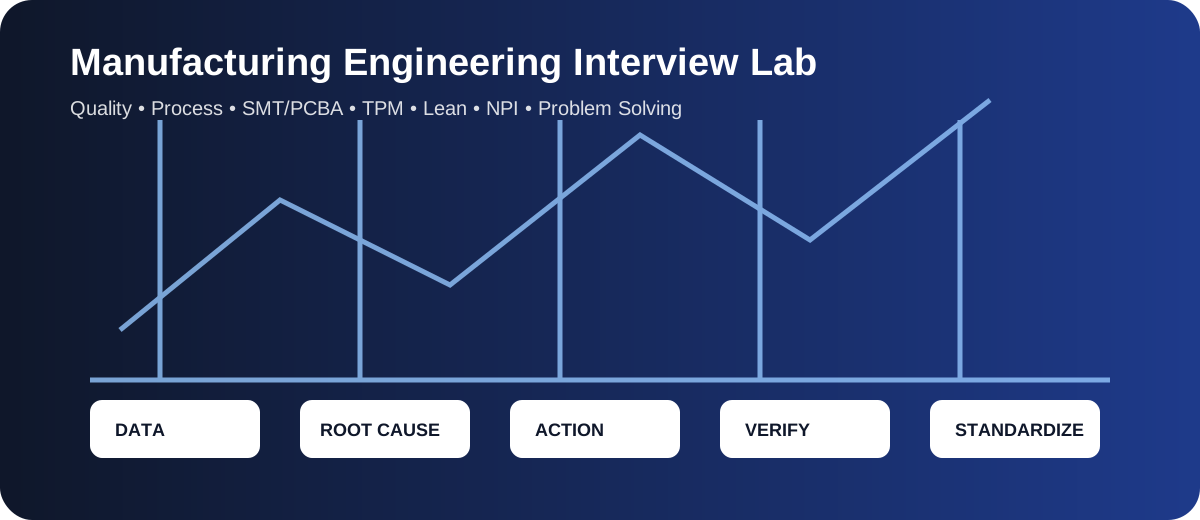
Manufacturing Engineer Interview Lab
คู่มือเรียนรู้และเตรียมสัมภาษณ์สำหรับสาย Manufacturing / Process / Production / Quality ในโรงงานอิเล็กทรอนิกส์ โดยเฉพาะ SMT/PCBA ตั้งแต่พื้นฐาน → เครื่องมือ → วิเคราะห์ปัญหา → Process → NPI → KPI → Case Interview → ภาษาอังกฤษ
หมายเหตุ: มาตรฐานและข้อกำหนดของแต่ละบริษัท/ลูกค้าอาจต่างกัน ให้ยึด Controlled Document, Customer Specific Requirements และข้อกำหนดล่าสุดขององค์กรเป็นหลัก
เส้นทางเรียนรู้แบบ Engineer
เรียนตามลำดับจาก “เข้าใจโรงงาน” → “ควบคุม Process” → “แก้ปัญหา” → “เพิ่ม Productivity” → “ตอบ Interview” โดยทุกหัวข้อเชื่อมโยงกัน
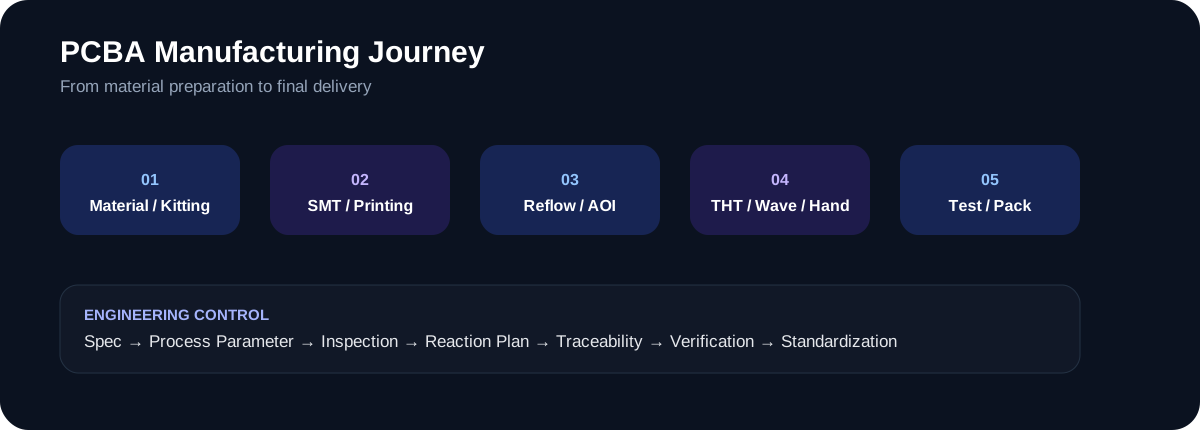
PCBA Manufacturing — ตั้งแต่ Material ถึง Delivery
ส่วนนี้เพิ่มจาก Control Plan ที่แนบมา โดยสกัดเป็น “หัวข้อเรียนรู้” เพื่อใช้เตรียมสัมภาษณ์และทำความเข้าใจ Process แบบไม่เปิดเผยข้อมูลลูกค้า/ชิ้นงานเฉพาะ
Wave • Selective • Hand Soldering — ต้องตอบได้
อย่าจำเพียงอุณหภูมิ ให้เข้าใจ Process Window, Thermal Profile, Flux, Solder Alloy, Dwell Time และ Defect Mechanism
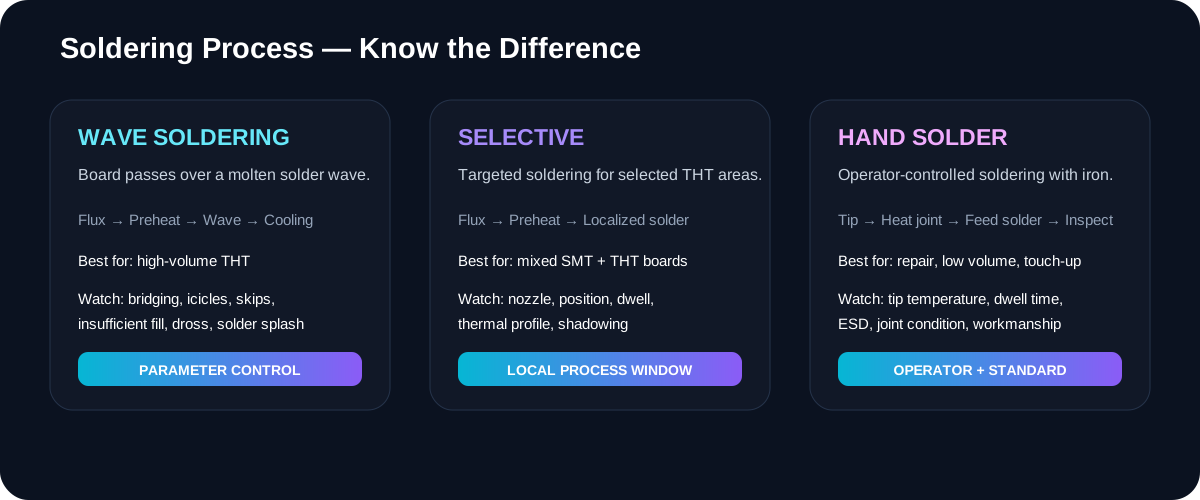
เหมาะกับ THT ปริมาณสูง: Flux → Preheat → Wave → Cooling. ต้องควบคุม solder temperature, conveyor speed, contact/dwell, preheat, flux และ board orientation.
BridgeIcicleSkipInsufficient Fillยิง solder เฉพาะจุดที่กำหนด เหมาะกับ Mixed Technology. จุดสำคัญคือ nozzle, position, flux, preheat, dwell และ thermal impact ต่อชิ้นส่วนข้างเคียง
NozzleDwellThermal Profileต้องควบคุม tip condition, tip temperature, heating time, solder feed, ESD, workmanship และ skill. ใช้กับ Touch-up, Repair, Low Volume หรือจุดที่ Auto process เข้าไม่ถึง
TipESDWorkmanshipแยก Material Lot → Solder paste / solder bar / flux → เปรียบเทียบ Parameter ก่อน-หลัง → ตรวจ SPI/AOI → ตรวจ stencil/nozzle/wave condition → ทำ controlled trial เพื่อยืนยัน cause ก่อนสรุป Root Cause
Equipment calibration, tip temperature, tip geometry, solder wire specification, heating/contact time, flux condition, operator skill, ESD, workmanship criteria และ traceability ของ repair/touch-up
SMT Process ที่ควรอธิบายเป็น Process Window
มองเป็น Input → Parameter → Output → Defect → Feedback ไม่ใช่แค่ชื่อเครื่องจักร
Stencil thickness/aperture, alignment, squeegee pressure/speed, separation speed, paste condition, cleaning frequency และ board support
ดู volume, height, area, offset และ trend. ใช้เป็น upstream feedback ก่อน defect ไหลไป Placement/Reflow
Feeder, nozzle, vision, component recognition, placement accuracy, polarity และ program/version control
Zone temperature, conveyor speed, soak, TAL, peak temperature, thermal mass และ profile validation
Coverage, false call, library, polarity, missing, offset, solder defects และ correlation กับ upstream process
ใช้ตรวจจุดที่ optical inspection มองไม่เห็น เช่น hidden joints/voids โดยต้องกำหนด acceptance criteria ตาม product/customer requirement
ICT • Flash • HI-POT • FCT • EEPROM
Test Engineering ไม่ใช่แค่กด PASS/FAIL ต้องเข้าใจ Program Control, Golden/Master Unit, Fixture, False Fail, False Pass, Traceability และ Reaction Plan
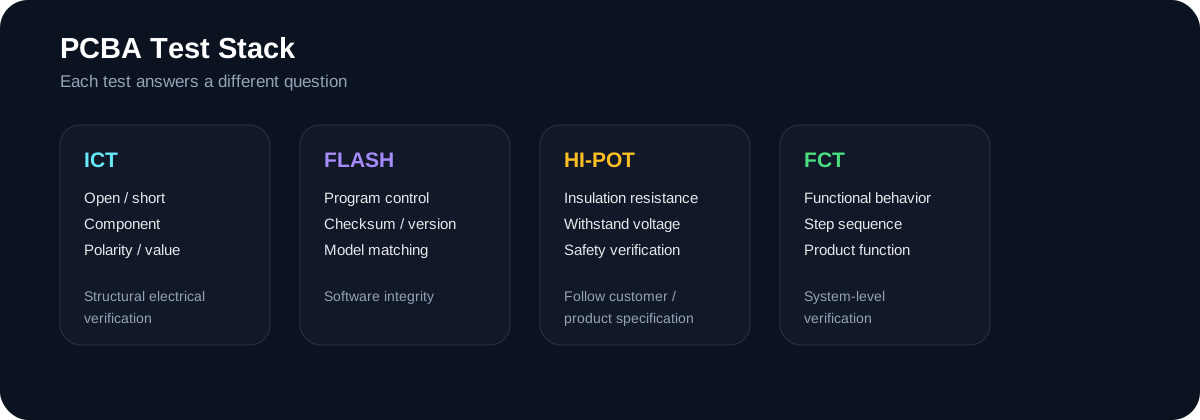
ตรวจ electrical structure เช่น open/short/component/polarity. สิ่งสำคัญคือ program revision, fixture condition, golden sample และ data traceability
ควบคุม Model → Program → Version/Checksum → PASS marking. ป้องกัน wrong model / wrong software ด้วย interlock และ independent verification
ตรวจ insulation resistance และ dielectric withstand ตาม product/customer specification. เป็น Safety-related test ต้องมี guarding, interlock และ reaction plan ที่ชัดเจน
ตรวจการทำงานระดับ product/system เช่น sequence, I/O, motor, sensor, communication และ EEPROM/version/date ตาม requirement
ICT OK แปลว่า electrical checks ที่ ICT ครอบคลุมผ่าน ไม่ได้แปลว่า Function ทั้งระบบสมบูรณ์. ให้ดู FCT step ที่ fail → fixture/interface → power → communication → firmware → functional component → upstream solder/assembly และเทียบกับ Golden Unit
มิติธุรกิจโรงงานที่ ME ควรรู้
Senior Engineer ต้องเชื่อม Technical Problem กับ Output, Cost, Delivery และ Customer Impact
มาตรฐานและระบบที่เกี่ยวข้อง
ไม่จำเป็นต้องท่องข้อกำหนดทุก Clause แต่ต้องรู้ว่า “ระบบใช้ควบคุมอะไร และ Evidence อยู่ที่ไหน”
หัวข้อที่ควรเรียนต่อให้ครบทุกมิติ
ใช้เป็น Backlog สำหรับทำเนื้อหาเชิงลึกต่อในอนาคต แบ่งตามความสำคัญของงาน Manufacturing / EMS / PCBA
QC 7 • 5M1E • 5 Why • Fishbone • Pareto • 8D • CAPA • NCR • MRB • Cost of Quality • Audit • Layered Process Audit • Customer Complaint • Supplier Quality • Quality Gate
APQP • PPAP • PFMEA • Control Plan • Process Flow • Special Characteristics • MSA • SPC • Capability • Control Reaction Plan • Change Management
PCB incoming • MSL • Solder Paste • Stencil • Printing • SPI • Placement • Feeder • Reflow • AOI • X-Ray • Cleaning • Depanelization • First Article
Lead forming • Manual Insert • Wave Soldering • Selective Soldering • Dipping • Hand Soldering • Touch-up • Flux • Solder Alloy • Thermal Profile • Solderability • Workmanship
ICT • FCT • Functional coverage • Test fixture • Golden sample • False Fail • False Pass • Flash programming • Checksum • EEPROM • HI-POT • Test data • Traceability
PM • PdM • BM • Autonomous Maintenance • Planned Maintenance • MTBF • MTTR • OEE • Six Big Losses • Spare Parts • Calibration • Equipment qualification
5S • Kaizen • VSM • Takt • Cycle Time • Line Balance • Bottleneck • SMED • Poka-Yoke • JIT • Kanban • Heijunka • Standard Work • Ergonomics
BOM • Drawing • Gerber • AVL • ECN/ECR • Revision • Prototype • Trial Run • Pilot • MP • Run@Rate • Process Validation • Lessons Learned • Horizontal Deployment
MOQ • SPQ • Lead Time • Safety Stock • Shortage • Allocation • Aging • Shelf Life • MSL • FIFO/FEFO • Incoming Inspection • Supplier Escalation
Production Plan • WIP • Schedule Adherence • Throughput • UPH • Capacity • Overtime • Changeover • Queue Time • Downtime • Bottleneck Management
Excel • SQL • Dashboard • MES • Traceability • SPC Automation • Alarm • Data Validation • Version Control • Digital Work Instruction • Barcode / QR
Training • Skill Matrix • Cross-functional Team • Conflict • Escalation • Daily Management • Meeting • Presentation • Coaching • Shift Handover
Machine Safety • LOTO • Chemical • PPE • ESD • Solder Fume • Temperature • Humidity • Fire • Ergonomics • Waste • Environmental control
Scrap Cost • Rework Cost • COPQ • Labor Cost • Machine Utilization • Material Loss • Cost Saving • ROI • Payback • Budget • Business Case
Tell me about yourself • STAR • Technical case • Leadership • Conflict • Failure • Strength/Weakness • Why us • Salary • English technical explanation
Mock Interview — จำลองห้องสัมภาษณ์
กดเริ่ม แล้วตอบเองก่อนเปิดแนวคำตอบ ฝึกให้ได้ทั้ง Technical Logic และ English Communication
กด “เริ่มสัมภาษณ์” เพื่อสุ่มคำถาม
ตัวอย่างบทสัมภาษณ์ภาษาอังกฤษแบบเต็ม
ฝึกตอบให้เป็นธรรมชาติ: short answer → evidence → engineering logic → result
“Could you briefly introduce your experience and explain what you can contribute to this role?”
“I have experience in electronics manufacturing, especially process control, production improvement and cross-functional problem solving. My approach is data-driven: I first confirm the actual problem, identify the major contributor, verify the root cause, implement corrective action and monitor the result. I am also comfortable working with Production, Quality, Maintenance and Engineering teams. I am interested in this role because I want to use that experience to improve quality, productivity and process stability on a larger manufacturing scale.”
“First, I would contain the affected products and confirm the defect with actual data. Then I would stratify the data by line, machine, model, material lot, shift and time to identify the change point. After that, I would use 5 Why or Fishbone analysis and verify the suspected cause with evidence or a controlled trial. Once the root cause is confirmed, I would implement the corrective action, verify effectiveness and update the standard to prevent recurrence.”
“I can connect production performance with engineering problem solving. I do not focus only on fixing today's problem; I also look at how to make the process stable, measurable and repeatable. I believe that combination of technical understanding, data analysis and cross-functional communication can help the team improve quality, delivery and productivity.”
บทบาทของ Manufacturing Engineer
Manufacturing Engineer (ME) คือคนที่ทำให้ Process ผลิตได้จริงอย่าง ปลอดภัย มีคุณภาพ ส่งมอบได้ ต้นทุนเหมาะสม และทำซ้ำได้ โดยต้องเชื่อม Design, BOM, Material, Equipment, Production, Quality, Maintenance, Test และ Customer Requirement เข้าด้วยกัน
สิ่งที่ Interviewer อยากเห็น
- คิดเป็นระบบและอธิบายเหตุผลได้
- แยก Symptom / Cause / Root Cause ได้
- ใช้ข้อมูลก่อนตัดสินใจ
- ทำงานข้ามแผนกได้
- รู้ว่าเมื่อไรต้อง Stop / Hold / Escalate
- ทำ Action แล้วต้อง Verify Effectiveness
Production KPI ที่ควรรู้
| KPI | ความหมาย | ME ควรถามต่ออะไร |
|---|---|---|
| Output / Throughput | จำนวนผลิตได้ต่อเวลา | คอขวดอยู่ที่ไหน? Cycle time เท่าไร? |
| Yield / FPY | อัตราผ่านและผ่านครั้งแรก | Defect หลักคืออะไร? Rework ซ่อนปัญหาหรือไม่? |
| OEE | Availability × Performance × Quality | Loss ตัวไหนใหญ่ที่สุด? |
| UPH / UPD | Units per hour/day | เทียบกับ Target และ Capacity อย่างไร? |
| Downtime | เวลาหยุดเครื่อง/ไลน์ | Breakdown หรือ Minor Stop? Pareto เป็นอย่างไร? |
| Scrap / Rework | ของเสีย/งานแก้ | Cost of Poor Quality เท่าไร? |
| CT / Takt Time | เวลาที่ใช้ผลิต vs Demand Pace | สถานีไหนเกิน Takt? |
Takt Time vs Cycle Time
Takt คือจังหวะที่ตลาดต้องการ ส่วน Cycle Time คือเวลาที่ Process ใช้ผลิตหนึ่งหน่วย หาก CT สูงกว่า Takt ต่อเนื่อง แสดงว่ากำลังผลิตไม่พอกับ Demand เว้นแต่จะมีการเพิ่มคน เครื่อง Parallel หรือปรับ Process
QC 7 Tools — จำให้เป็น “ลำดับการใช้”
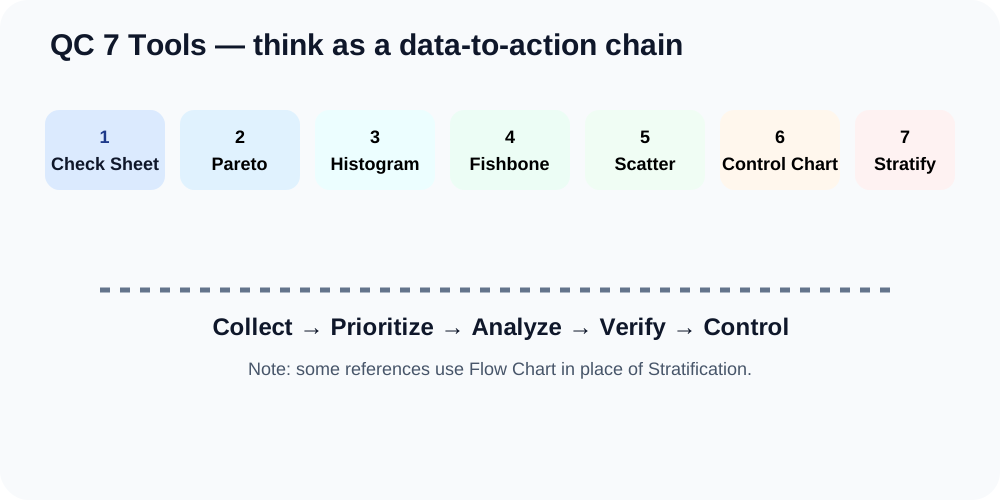
| Tool | ใช้ทำอะไร | ตัวอย่าง PCBA |
|---|---|---|
| Check Sheet | เก็บข้อมูลอย่างเป็นระบบ | นับ Bridge, Missing, Polarity ตามเวลา/Line |
| Pareto | จัดลำดับปัญหา | เลือก Top 3 Defect ที่กระทบมากสุด |
| Histogram | ดู Distribution | ดูความกระจายของ Solder Height |
| Fishbone | แตก Potential Causes | Man/Machine/Material/Method/Measurement/Environment |
| Scatter | ดูความสัมพันธ์ของตัวแปร | Humidity vs Defect Rate |
| Control Chart | เฝ้าดู Stability/Variation | ติดตาม Process Parameter |
| Stratification | แยกกลุ่มข้อมูล | แยก Model, Shift, Machine, Lot |
คำตอบสัมภาษณ์
หมายเหตุ: รายการ QC 7 Tools มีความแตกต่างตามตำรา/องค์กร บางแหล่งใช้ Flow Chart ในชุดแทน Stratification จึงควรรู้ทั้งสองคำ
5M1E + Fishbone + 5 Why + Change Point
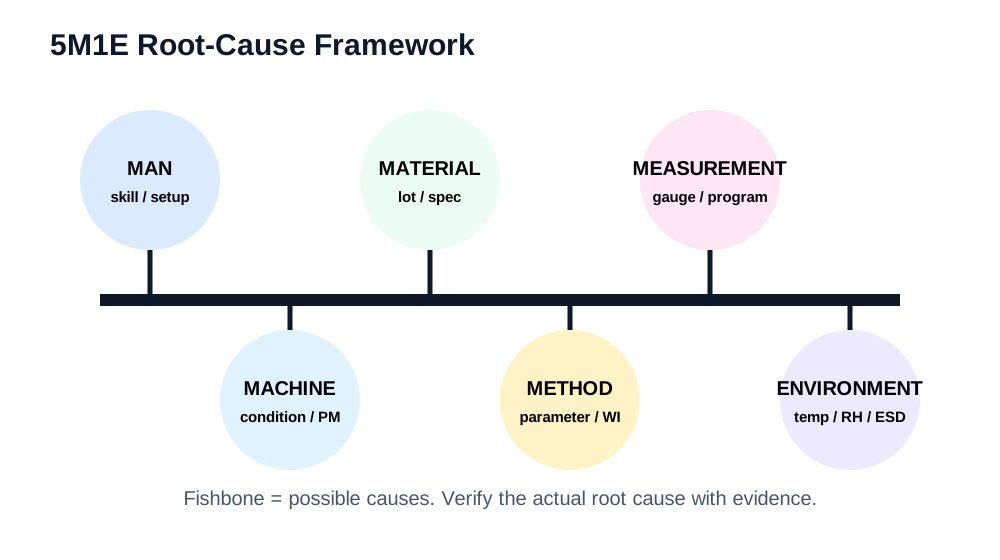
5M1E
5 Why: อย่าหยุดที่ “Operator Error”
ถ้าพบ Operator ทำผิด ให้ถามต่อว่า ทำไมระบบจึงเปิดโอกาสให้ทำผิด? เช่น WI ไม่ชัด, Program ไม่มี Interlock, Verification ไม่ครบ, Training ไม่เพียงพอ หรือ Change Control ไม่สมบูรณ์
Change Point Analysis
ถามว่า “ก่อนที่ปัญหาจะเริ่ม มีอะไรเปลี่ยน?” เช่น Model, Material Lot, Machine, Program, Operator, Shift, Parameter, Maintenance, Stencil, Supplier, Environment
8D, CAPA และ Containment
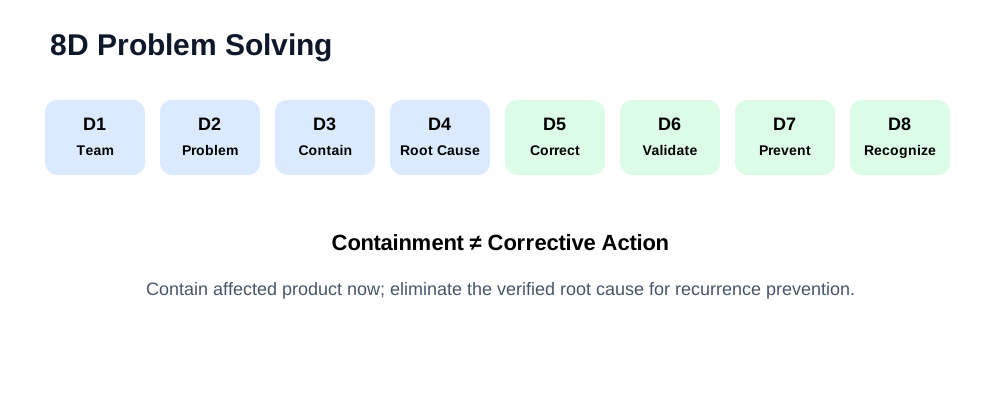
| Step | สาระ |
|---|---|
| D1 | Form the team |
| D2 | Describe the problem with facts: What/Where/When/How many |
| D3 | Interim containment: Hold, Sort, Stop shipment, protect customer |
| D4 | Root cause and escape point; verify with evidence |
| D5 | Permanent corrective action |
| D6 | Implement and validate effectiveness |
| D7 | Prevent recurrence / horizontal deployment / update system |
| D8 | Recognize team / close |
CAPA
Corrective Action แก้สาเหตุของ Nonconformity ที่เกิดขึ้นแล้ว ส่วน Preventive / Systemic Action มุ่งลดโอกาสเกิดปัญหาในกระบวนการหรือผลิตภัณฑ์อื่นด้วย ทั้งนี้คำศัพท์และรูปแบบขึ้นกับระบบคุณภาพขององค์กร
Process Flow → PFMEA → Control Plan → WI
PFMEA
ใช้คิดล่วงหน้าว่า Process อาจ Fail อย่างไร, Effect คืออะไร, Cause คืออะไร, Current Control คืออะไร และต้องลด Risk ตรงไหน
ในแนวทาง AIAG-VDA FMEA มีการเน้น Action Priority (AP) มากขึ้น ดังนั้นในการสัมภาษณ์ควรตอบให้ตรงกับระบบที่บริษัทใช้อยู่ ไม่ควรยืนยันว่า RPN เป็นวิธีเดียวที่ทุกบริษัทใช้
Control Plan
ระบุสิ่งที่ต้องควบคุม, Specification, Measurement Method, Frequency, Sample Size, Responsibility และ Reaction Plan เพื่อให้ความเสี่ยงจาก PFMEA ถูกนำไปควบคุมใน Production จริง
SPC, Control Chart, Cp/Cpk และ MSA
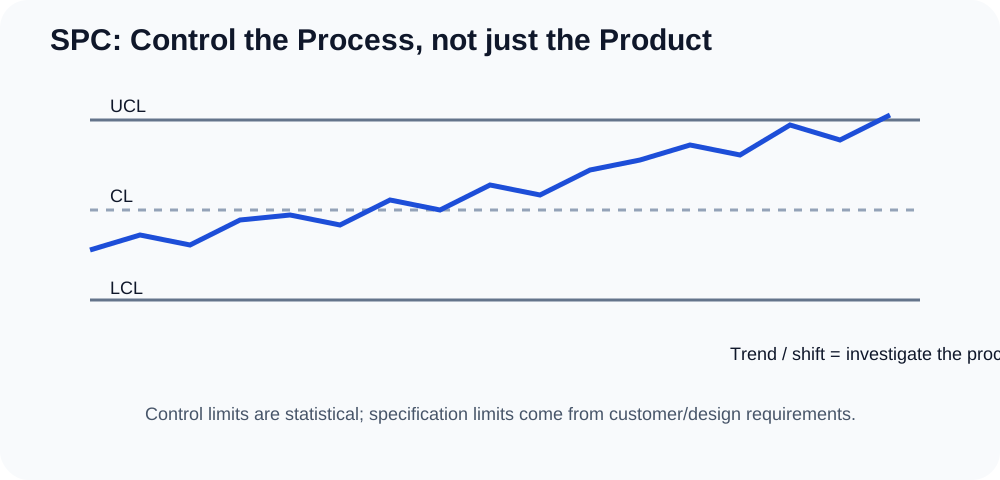
Control Limits vs Specification Limits
Capability
Cp มอง Potential Capability จาก Variation ส่วน Cpk คำนึงถึงตำแหน่งของ Process Mean ด้วย ดังนั้นโดยหลัก Cpk ≤ Cp. ก่อนคำนวณ Capability ต้องแน่ใจก่อนว่า Process มี Stability และข้อมูลเหมาะสมกับการวิเคราะห์
MSA / Gage R&R
Measurement System Analysis ตรวจว่าระบบวัดเชื่อถือได้หรือไม่ เช่น Repeatability, Reproducibility, Bias, Linearity, Stability โดย Gage R&R เป็นเครื่องมือสำคัญเมื่อการวัดเป็นตัวแปรต่อเนื่อง
TPM, OEE และ Six Big Losses
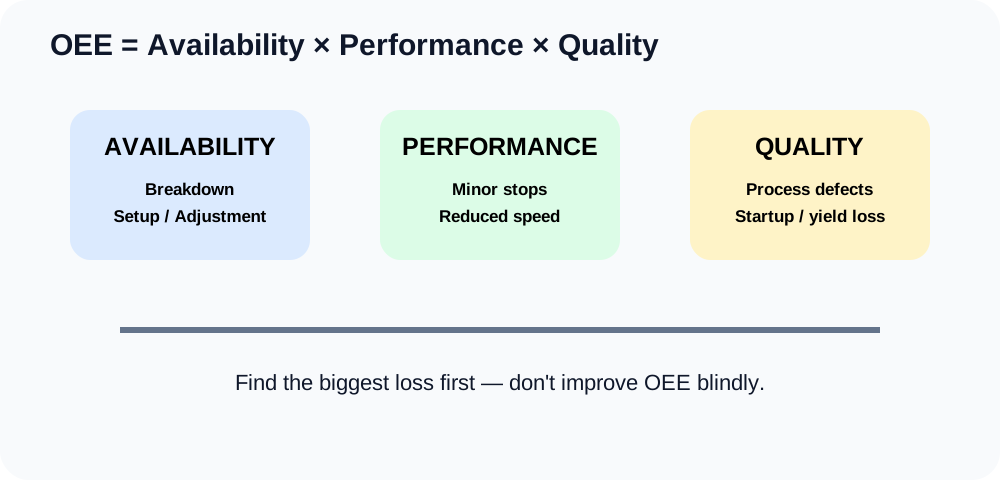
| OEE Loss | ตัวอย่าง |
|---|---|
| Breakdown | Machine failure |
| Setup & Adjustment | Changeover, setup, parameter adjustment |
| Idling & Minor Stops | Jam, sensor, short stop |
| Reduced Speed | Run slower than ideal |
| Process Defects | Defect / Rework |
| Startup / Reduced Yield | Loss during startup / stabilization |
TPM 8 Pillars
1) Autonomous Maintenance 2) Planned Maintenance 3) Focused Improvement 4) Quality Maintenance 5) Early Equipment Management 6) Training & Education 7) Safety, Health & Environment 8) Office TPM
Autonomous Maintenance
ให้ Operator ทำ Basic Care เช่น Cleaning, Inspection, Lubrication, Tightening และการตรวจ Abnormality ตาม Standard ขณะที่ Maintenance รับผิดชอบงานวิศวกรรม/บำรุงรักษาที่เหมาะสม
Lean Manufacturing, Kaizen, 5S, SMED, Poka-Yoke
7 Wastes ที่ควรรู้
Transportation, Inventory, Motion, Waiting, Overproduction, Overprocessing, Defects และหลายองค์กรเพิ่ม Unused Talent เป็น Muda ตัวที่ 8
PDCA
SMT/PCBA Process ที่ต้องอธิบายได้
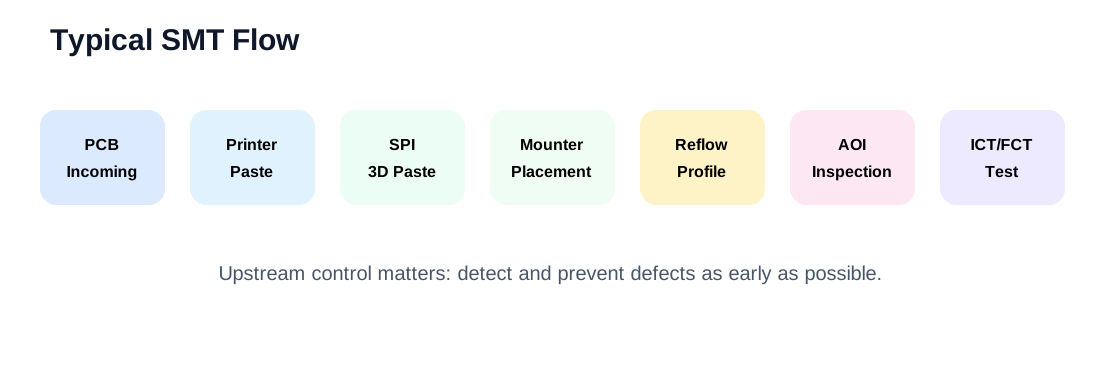
1) Solder Paste Printing
ประเด็นสำคัญ: Stencil, Aperture, Alignment, Squeegee, Pressure, Speed, Separation, Paste condition, Cleaning และ PCB support
2) SPI
ตรวจ Solder Paste เช่น Volume, Area, Height, Offset เพื่อจับปัญหา upstream ก่อนผ่าน Process ต่อไป
3) Pick & Place
ตรวจ Feeder, Nozzle, Component Recognition, Placement Accuracy, Program, Polarity และ Component Orientation
4) Reflow
ต้องเข้าใจ Temperature Profile, Preheat, Soak, Reflow/Peak และ Cooling โดยต้องยึด Profile ตาม Solder Paste และข้อกำหนดของ Process/Component
5) AOI
ตรวจ Optical Defect เช่น Missing, Wrong, Polarity, Offset และ Solder-related defects ตาม Capability ของระบบ
6) Downstream
อาจมี Manual Insert, Wave/Selective Solder, Touch-up, Cleaning, ICT, FCT, Programming, Final Inspection และ Packing ขึ้นกับ Product
SPI, AOI, X-Ray, ICT, FCT และ Traceability
| ระบบ | จุดประสงค์ | จำง่าย |
|---|---|---|
| SPI | ตรวจ Solder Paste | ก่อน Placement |
| AOI | ตรวจ Optical Assembly/PCB | เห็นสิ่งที่กล้องตรวจได้ |
| X-Ray | ตรวจจุดที่มองไม่เห็นด้วย Optical เช่นบาง BGA/Hidden Joint | ดูภายใน/ใต้ชิ้นส่วน |
| ICT | ตรวจ Electrical/Component/Node ตาม Test Coverage | In-Circuit |
| FCT | ทดสอบการทำงานของ Product | Functional |
False Call vs True Defect
เมื่อ AOI/ICT แจ้ง NG ต้องแยกว่าตัว Product ผิดจริง หรือระบบตรวจผิด (False Call / Test Issue) เพราะการแก้ผิดจุดอาจทำให้เสียเวลาและทำให้ข้อมูล Defect บิดเบือน
Traceability
ควรสามารถย้อนกลับ Product → Model/Revision → PCB Lot → Component Lot → Machine/Line → Program Version → Operator/Shift → Inspection/Test Result ได้ตามระดับที่องค์กรและลูกค้ากำหนด
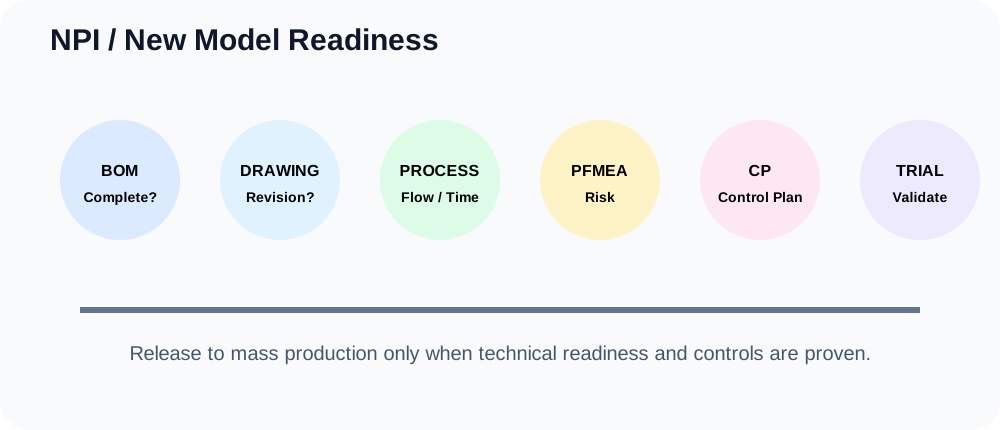
NPI, BOM, ECN/ECR และ New Model Readiness
Gate ก่อน Mass Production
Change Control
การเปลี่ยน Material, Supplier, PCB, Component, Program, Parameter, Machine หรือ Process ต้องประเมินผลกระทบและควบคุม Revision/Approval/Effective Date ตามระบบของบริษัท
APQP 5 Phases — จาก Concept สู่ Mass Production
จำ APQP ให้เป็น “Gate” ไม่ใช่แค่ชื่อเอกสาร: ทุก Phase ต้องมี Input, Output, Risk, Evidence และ Gate ก่อนส่งต่อไป Phase ถัดไป โดยรายละเอียดจริงให้ยึด AIAG edition และ Customer Specific Requirements ที่องค์กรใช้งาน
APQP เป็น framework/timing ที่เชื่อม DFMEA/PFMEA, Control Plan, MSA, SPC และ PPAP ให้เดินไปในทิศทางเดียวกัน
ต้องมอง Readiness ก่อน Trial: BOM/Revision → Process Flow → Equipment/Tooling → PFMEA → Control Plan → WI → Material → Test → Capacity → Quality Gate
“New Model จะเริ่ม Mass Production ได้เมื่อไร?” — ไม่ใช่ตอบด้วยวันที่อย่างเดียว ต้องตอบด้วย Readiness Criteria + Evidence + Gate Approval
NPI คือกระบวนการนำผลิตภัณฑ์ใหม่เข้าสู่การผลิต ส่วน APQP คือ structured quality planning framework ที่ใช้วางแผนและควบคุมความเสี่ยงตั้งแต่ requirement/design/process/validation ไปจน feedback. ในโรงงานสามารถใช้ APQP เป็น backbone ของ NPI ได้
ISO 9001 / IATF 16949 / Audit Mindset
Core Tools ที่ควรรู้
APQP, Control Plan, PPAP, FMEA, MSA, SPC โดยแต่ละองค์กรอาจกำหนดรูปแบบเอกสารและ Timing ต่างกัน
Audit Question: “How do you ensure the process is controlled?”
ตอบด้วยหลักฐาน: Standard Work → Parameter Control → Inspection → Reaction Plan → Records → Calibration/MSA → Training → Change Control → Internal Audit / Layered Process Audit ตามระบบ
Material, Capacity, Line Balancing และ Cost
Capacity Calculation
เริ่มจาก Demand → Available Time → Takt → Cycle Time → UPH → Bottleneck → จำนวนเครื่อง/คนที่ต้องใช้ โดยต้องรวม Downtime, Yield และ Efficiency ตามความเหมาะสม ไม่ควรใช้ Ideal Capacity อย่างเดียว
Material Shortage: Engineer ควรมองอะไร
- On-hand / Allocated / Open PO / Incoming
- Lead Time และ Supplier reliability
- MOQ / SPQ / Order multiple
- Demand horizon และ Safety Stock
- Alternative part / Approved substitute
- Impact ต่อ Production Schedule
- Risk ของ E&O / Excess Inventory หากซื้อเกิน
Line Balancing
จัดงานให้ CT ของแต่ละ Station สมดุลกับ Takt ลด Bottleneck และ Idle Time โดยต้องไม่แลก Productivity กับ Quality/Safety
Safety, ESD, MSL และ Material Handling
ESD
Electrostatic Discharge อาจทำให้ Semiconductor เสียแบบทันทีหรือ Latent Failure การควบคุมต้องมองทั้ง Grounding, Wrist Strap, Footwear, ESD Workstation, Ionizer, ESD Floor/Packaging, EPA discipline และ Verification ตามข้อกำหนดองค์กร
MSL — Moisture Sensitivity Level
ชิ้นส่วนบางประเภทดูดความชื้น เมื่อผ่าน Reflow ความชื้นอาจทำให้เกิด Package Damage/Delamination (“Popcorn”) จึงต้องควบคุม Dry Storage, Floor Life, Humidity Indicator และ Baking ตามมาตรฐาน/ผู้ผลิตกำหนด
Safety Interview
Case ที่ควรฝึกจนตอบได้อัตโนมัติ
ประโยคเด็ด: “I would not assume the cause before checking the data and the change point.”
คำถามสัมภาษณ์ที่ต้องตอบให้ได้
Check Sheet, Pareto Chart, Histogram, Fishbone Diagram, Scatter Diagram, Control Chart และ Stratification; บางองค์กรใช้ Flow Chart ในรายการ
เมื่อมีหลายปัญหาและต้องเลือกสิ่งที่มี Impact สูงสุดก่อน
ไม่ใช่ เป็นการแตก Potential Causes; ต้อง Verify ด้วย Evidence
ถาม Why ต่อเนื่องอย่างมีหลักฐานเพื่อไปถึงสาเหตุที่ควบคุมได้จริง ไม่ใช่ถามให้ครบ 5 ครั้งแบบตายตัว
Total Productive Maintenance: แนวทางเพิ่ม Equipment Effectiveness โดยทุกฝ่ายมีส่วนร่วม ลด Breakdown/Defect/Accident
Availability × Performance × Quality
Breakdown, Setup/Adjustment, waiting, material, maintenance response และ downtime coding
Cp มอง Potential Capability จาก Variation; Cpk รวมผลของ Process Centering ด้วย
Control Limit มาจากสถิติของ Process; Spec Limit มาจาก Requirement/Design/Customer
PFMEA ระบุและประเมิน Process Risk; Control Plan กำหนดวิธีควบคุม Risk ใน Production
Interim Containment เพื่อป้องกันไม่ให้ปัญหากระทบ Customer/Production เพิ่มขึ้น
Containment คุมผลกระทบเฉพาะหน้า; Corrective Action กำจัด Root Cause ที่พิสูจน์แล้ว
สะท้อนความสามารถของ Process ตั้งแต่ครั้งแรก; Final Yield ที่สูงจากการ Rework อาจซ่อน Process Problem
SPI เน้น Solder Paste หลัง Printing; AOI ตรวจ Optical Defects ของ Assembly/PCB ตาม Capability ของระบบ
Stencil/Aperture, Printing parameter, alignment, paste condition, placement, pad/component geometry, reflow และ environment; ต้องใช้ข้อมูลพิสูจน์
ควบคุม thermal process ให้ solder joint และ component/package อยู่ใน Process Window ที่เหมาะสมตาม Material/Component/Requirement
Moisture Sensitivity Level เป็นระดับความไวต่อความชื้นของชิ้นส่วนที่เกี่ยวข้องกับการควบคุม Floor Life และ Reflow exposure
ESD อาจทำให้ Semiconductor เสียแบบทันทีหรือเกิด Latent Failure ต้องควบคุม EPA, grounding, wrist strap, footwear, packaging และ verification
Drawing/Revision, BOM, Material, Process Flow, Capacity, Machine, Program, Tooling, PFMEA, Control Plan, WI, Inspection/Test, Trial และ Change Control
เริ่มจาก Baseline → Identify bottleneck/loss → Data/Pareto → ทดลอง Improvement → Validate Quality/Safety → Standardize → Monitor KPI
ไม่โต้เถียงด้วยความรู้สึก ให้เทียบ Standard, Requirement และ Data หากวิธีปัจจุบันดีกว่า Standard จริง ให้เข้าสู่ Change Control ไม่เปลี่ยนหน้างานแบบไม่ควบคุม
ตรวจว่า Root Cause ถูกต้องหรือมีหลาย Cause, ดู Residual Risk, Stratify defect ที่เหลือ และทำ PDCA รอบถัดไป โดยไม่อ้างว่า “แก้เสร็จ” เพียงเพราะดีขึ้น
ต้องประเมิน Risk และ Customer Requirement; ไม่ปล่อย Product ที่ไม่เป็นไปตามข้อกำหนดโดยพลการ หากมี Deviation ต้องเป็นกระบวนการอนุมัติที่ควบคุมได้
ใช้ข้อมูลและเป้าหมายร่วม เช่น Safety/Quality/Delivery/Cost แยกข้อเท็จจริงจากความคิดเห็น และทดลองทางเลือกที่วัดผลได้
ประโยคภาษาอังกฤษที่ใช้ตอบ Interview
| สถานการณ์ | ประโยค |
|---|---|
| เริ่มวิเคราะห์ | “First, I would confirm the problem with actual data.” |
| ไม่เดาสาเหตุ | “I would not assume the root cause before verifying the evidence.” |
| แยกข้อมูล | “I would stratify the data by model, machine, lot, shift and time.” |
| หาจุดเปลี่ยน | “I would identify what changed when the problem started.” |
| Containment | “We need to contain the affected lot before releasing the product.” |
| Root Cause | “The suspected cause must be verified by evidence or a controlled experiment.” |
| Corrective Action | “We implemented corrective action and verified its effectiveness.” |
| ป้องกันซ้ำ | “We updated the standard and applied the lesson horizontally to similar processes.” |
| OEE | “I would break down OEE losses and prioritize the biggest contributor.” |
| ทีม | “I coordinate with Production, Quality, Maintenance and Engineering to solve cross-functional issues.” |
STAR สำหรับคำถาม “เล่าปัญหาที่ยากที่สุดที่เคยแก้”
“We had a recurring problem in [process]. My responsibility was to [task]. I analyzed the data by [method]. We identified [root cause] and implemented [action]. After validation, [result/KPI] improved from [A] to [B]. We then standardized the process to prevent recurrence.”
เครื่องมือขั้นสูงที่ช่วยให้ตอบได้เหนือระดับ
DMAIC จำง่าย
DOE เหมาะเมื่อไร?
เมื่อปัญหามีหลายปัจจัยที่อาจมีผลร่วมกัน เช่น Reflow Temperature, Conveyor Speed, Paste Condition และ Printing Parameter และการทดลองทีละปัจจัยอาจมอง Interaction ไม่เห็น
Defect ของ PCBA ที่ควรรู้จัก
| Defect | Potential Causes | แนวคิดตรวจสอบ |
|---|---|---|
| Solder Bridge | Paste volume, stencil, alignment, pad/component geometry, process | SPI + AOI + printing condition + change point |
| Insufficient Solder | Paste transfer, aperture, paste condition, printing | SPI volume/height/area |
| Open Solder | Insufficient paste, placement, pad/joint condition | AOI/X-Ray/ICT/FCT ตามจุดตรวจ |
| Missing Component | Feeder, pickup, placement, program | Machine log + AOI + feeder verification |
| Wrong Component | Material mix-up, feeder/program | Part number + barcode + program verification |
| Polarity Wrong | Program/setup/marking interpretation | Drawing + program + first article verification |
| Tombstone | Pad imbalance, paste/placement, thermal imbalance | Compare pad/paste/reflow condition |
| Component Crack | Handling, placement force, board flex, thermal/mechanical stress | Failure analysis + handling history |
| Cold / Poor Solder Joint | Thermal profile, contamination, solder/material condition | Profile + joint inspection + material condition |
มาตรฐานที่ควรรู้ชื่อ
ในสาย PCBA ควรรู้จักตระกูลมาตรฐาน/ข้อกำหนด เช่น IPC-A-610 สำหรับ Acceptability ของ Electronic Assemblies และ J-STD-001 สำหรับ Soldered Electrical and Electronic Assemblies แต่เกณฑ์จริงต้องยึด Revision และ Customer Requirement ที่บริษัทกำหนด
คำถาม HR และคำถามเชิงพฤติกรรม
โครงสร้าง 60–90 วินาที: Current role → Core expertise → 1–2 achievements → Why this role.
เชื่อมสิ่งที่บริษัททำกับสิ่งที่คุณถนัด เช่น PCBA/SMT, NPI, quality improvement, productivity และ cross-functional engineering อย่าตอบแค่ “เงินเดือนดีกว่า”
เลือก Weakness ที่แก้ได้จริงและมีระบบแก้ เช่น “บางครั้งผมลงรายละเอียดมากเกินไป จึงใช้ Priority/Deadline และกำหนด Decision Point เพื่อไม่ให้กระทบงานหลัก”
อย่าโทษคนอื่น: Situation → what went wrong → what you learned → system improvement.
จัดลำดับ Safety → Customer/Quality Risk → Production Impact → Deadline และสื่อสารสถานะ/Owner/ETA ให้ชัดเจน
เสนอข้อเท็จจริง, Risk, Alternative และ Recommendation; หากตัดสินใจต่างจากข้อเสนอ ให้ดำเนินการตามคำสั่งที่ชอบด้วยระบบ พร้อมบันทึก/ยกระดับเมื่อมี Safety หรือ Compliance Risk
คำตอบ “จุดแข็ง” ที่เหมาะกับ ME
คำถามที่ควรถามบริษัทกลับ
แผ่นจำก่อนเข้าห้องสัมภาษณ์
10 คำที่ต้องอธิบายได้โดยไม่ท่อง
Root CauseContainmentCorrective ActionOEECpkPFMEAControl PlanFPYTakt TimeBottleneck
เช็กลิสต์ก่อนเข้าห้องสัมภาษณ์
Technical
Interview
คำถามที่คุณควรถาม Interviewer กลับ
- “What are the main responsibilities and KPIs for this position?”
- “What are the biggest manufacturing challenges the team is currently facing?”
- “Which processes and products will I be responsible for?”
- “How does Engineering work with Production, Quality and Maintenance?”
- “What would you expect the successful candidate to achieve in the first three to six months?”
เกี่ยวกับคู่มือนี้
สร้างขึ้นเพื่อเป็นสื่อการเรียนรู้แบบเปิดสำหรับผู้สนใจ Manufacturing / Process / Production / Quality Engineering โดยไม่มีระบบสมาชิก ไม่มีการเก็บข้อมูลส่วนตัว และไม่มี Analytics ภายนอก การจดจำตำแหน่งอ่านใช้ localStorage ใน Browser ของผู้ใช้เท่านั้น
หากล้าง Site Data/Browser Storage หรือเปลี่ยน Browser/Device ตำแหน่งอ่านจะไม่ถูกย้ายตามไปด้วย